November 2018

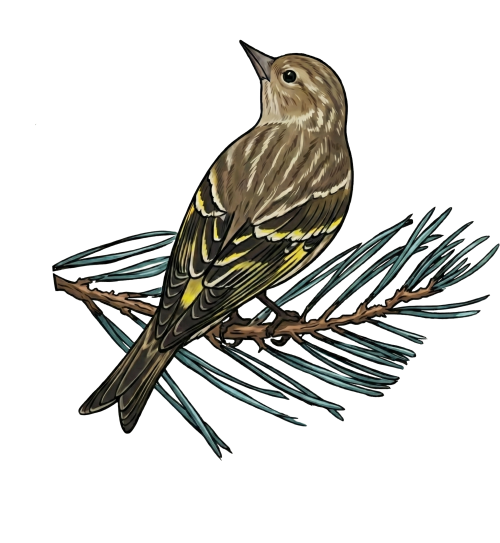
The SISKIN: Newsletter of the Northern Virginia Bird Club
Vol. 63, No. 4 — November 2018
Inside
Calendar of NVBC field trips, November 7, 2018 – February 3, 2019
2018 Treasurer’s Report
2019 ASNV Winter Waterfowl Survey
Upcoming Christmas Bird Counts in Northern Virginia
Val Kitchens Memorial Plaque in Fort C.F. Smith Park
Delightful Kites in Northern Virginia
Winter Birding in Nova Scotia
Insert – 2019 membership renewal notice
Winter Chincoteague Trip
The Winter Chincoteague Weekend club trip is scheduled for February 1-3 (Friday to Sunday) co-led by Larry Cartwright and me. February is an excellent time to visit Chincoteague National Wildlife Refuge (NWR) and the Chesapeake Bay Bridge-Tunnel (CBBT) Islands. The Refuge is loaded with wintering waterfowl while the CBBT is famous for wintering sea ducks. On last year’s trip, we tallied 91 species despite the bitterly cold weather and extensive frozen water. Our highlight sightings at Chincoteague were a male Eurasian Wigeon, Lesser Black-backed Gulls, Common Goldeneyes and, once again, a spectacular flyover of Snow Geese while we were at the beach. At Kiptopeke State Park, we enjoyed an obliging pair of Snow Buntings at the fishing pier and super close looks at Red-throated Loons just off the pier.
+4
At the CBBT Islands, we found Long-tailed Ducks, Great Cormorants, Northern Gannets, Purple Sandpipers, Black and Surf Scoters and best of all, an immature male Common Eider. Plans for the weekend include birding the Chincoteague area Friday afternoon starting at 3:15 pm (optional) and Saturday starting at 7:30 a.m. Activities on Friday and Saturday include birding along Beach Road, Swan Cove, Tom’s Cove and around the Wildlife Loop. Time and tides permitting, we will also visit the Queen Sound Flats, the Chincoteague City mudflats and Mariner’s Point. On Sunday, we will bird Kiptopeke State Park before our trip to the CBBT Islands. We will be limited to a one-hour visit to island #4 due to the construction of a new tunnel between islands #1 and #2 and the storage of construction equipment on island #3.
+4
The CBBT trip requires security forms in advance and an extra fee for the security escort. The trip concludes at noon on Sunday. NVBC membership is required for this trip. Registration will open on November 14 at 6 am. To sign up for this trip, please email Elton Morel. The trip is limited to 24 people and usually fills up quickly. Please do not make your hotel reservations until your trip registration has been confirmed. When signing up, please indicate whether you are interested in Sunday morning’s CBBT Island trip and a Saturday evening group dinner. If the trip is full, your name can be put on a waiting list.
+4
We have obtained a special rate of $78 per night on twenty rooms for Friday and Saturday nights at the Best Western Chincoteague Island Hotel on Maddox Boulevard. A two-night stay is usually required. Hotel reservations must be made by January 18 to get this special group rate. Participants should make your own reservations by calling 800-553-6117 and be sure to say you are with the Northern Virginia Bird Club. Check-in time is 3 pm on Friday, February 1, with 24-hour notice required for cancellation. Chincoteague NWR is a US fee area. —Elton Morel
NVBC General Meeting — Wednesday, November 28, 8 PM
Native Plants and Bird Conservation, Home and Abroad
Speaker: Matt Bright
Join Matt Bright, the Earth Sangha’s Conservation Manager, as he discusses how native plants are important to bird conservation, and how the Earth Sangha is working both in the DC area and in the Dominican Republic to protect migratory birds through the propagation and conservation of native plant species. Matt will explain how native plants play a critical role in supporting birds and what practical steps homeowners can take to protect and promote birds in their gardens. In partnership with the Virginia Society of Ornithology, the Earth Sangha has begun conducting bird counts in conservation sites in the western Dominican Republic. Matt will share some of the initial data and discuss some of the considerations and challenges they have encountered thus far.
+3
Matt Bright has worked full-time at Earth Sangha since 2011. Matt works on plant propagation, conservation, and restoration here in Northern Virginia and in the rural Dominican Republic. He is a Certified Horticulturist with the Virginia Nursery and Landscape Association, a member of the Virginia Native Plant Society and the Arlington Regional Master Naturalists.
+1
Early bird refreshments start at 7:30 PM. Any contributions of food or beverage will be most gratefully received. There will be a drawing for door prizes. Northern Virginia Bird Club pins will be available for members who would like to buy them ($5 each). MEETING PLACE: St. Andrews Episcopal Church, 4000 Lorcom Lane, Arlington, 22207.
+2
Presidential Peentings
As autumn and winter approach, birders start thinking about colder weather birding. Migration is causing more activity in our local parks and hawks and other raptors are on the move. Winter birds are gradually starting to show up in our region. We expect to see birds such as wintering sparrows and waterfowl every winter. However, there are other birds that don’t always show up here in the cold season. These are the irruptive birds which in some years will leave their normal winter ranges and move south. In other years, though, they will stay put and we won’t see them here. As with most birds that migrate in the fall, these birds are looking for food. If food sources such as pine cones and other seed bearing plants are depleted in areas to the north such as the Boreal Forest, the birds which depend on this food will move out.
+4
Birds that can irrupt and move into our area for the winter include Red-breasted Nuthatches, Pine Siskins, Purple Finches, White-winged Crossbills, and Common Redpolls. Probably the most charismatic irruptive birds are Snowy Owls. They also move south for food, but since they don’t eat seeds, their irruption patterns are different than those of the finches. This year may turn out to be a good one for irruptive seed-eating species. Already, there have been several Red-breasted Nuthatch sightings in September. Hopefully, there is more to come, so keep an eye out for these special visitors. It’s another reason to get outside and enjoy the cold weather. —Larry Meade
+4
2018 Treasurer’s Report
The following is the Club 2018 Financial Report. At the end of the year, the Club had 368 family and individual memberships and nearly 500 members. Memberships were down 15 from the end of 2017, reducing dues accordingly. Meeting expenses were less than anticipated due to members who waived speaker honorariums, for which we express our deep appreciation.
+3
Income received
Dues for 2018: $3,989
Bird Watcher’s Digest & pin sales: $5
Donations, including Amazon Smile: $206
Total Income: $4,200
Expenses
Organizational costs (PO box, VA, Paypal, etc): $439
Meeting expenses (hall rental, speakers, prizes, refreshments): $829
Printing and postage (bulk mail permit): $2,265
Val Kitchens Youth Educational Grant: $500
Val Kitchens Memorial Plaque for Fort CF Smith: $500
Total Expenses: $4,533
Net for 2018: -$333
At the end of August 2018, the Club had total assets of $9,657, which included $2,128 in dues received for future years beyond 2019. There is $100 in the Reserve for Educational Grants and $7,429 in Operational Assets. —Jean Tatalias, Treasurer
Audubon Society of Northern Virginia Winter Waterfowl Survey
On Saturday, February 9 and Sunday, February 10, 2019, birders of all skill levels will join up to count waterfowl in Fairfax, Arlington, and Prince William counties, including the Potomac and Occoquan watersheds. Novice birders will be paired with expert bird enthusiasts. Larry Cartwright continues as the volunteer compiler for this year’s count. For more information and to join the team, email info@audubonva.org or call 703-438-6008.
+2
Val Kitchens Memorial Plaque at Fort C.F. Smith Park
Last spring, long-time club member Peter Ross thought it would be a great idea if there could be a plaque commemorating Val Kitchens installed on one of the benches near the bird stream at Fort C.F. Smith Park in Arlington. As many club members know, Val was a major force in having this water feature added to the park. It’s been a great place for a wide variety of birds to drink and bathe, and thus is a great place to view warblers, sparrows and other passerines coming down to the rocks in the tumbling stream. Val was instrumental in making C.F. Smith one of the best birding spots in the County and also ensuring the park was preserved as great bird habitat.
+3
While the idea for the plaque may have been a quick thought, Peter put the work in to find out the feasibility, the cost, and the county paperwork process. This summer Peter generously offered to pay half of the $1,000 cost if the Bird Club could contribute the other half. The Board agreed to this donation and Peter completed the application. The plaque is in the works! The citation will read: “Dedicated to Valerie Kitchens 1937-2013 who championed the creation of this water feature”.
+3
This will be a visible reminder of all that Val did for the Club, for birds, and for birding. Our Club youth educational grant is also named for her. And finally, thanks to Elton Morel who “inherited” Val’s historical collection of boxes of bird walk lists and worked to put these records into eBird, the nation has a permanent record of her contributions. If you check the top 100 all-time Arlington eBirders, Val is second with 213 species, first in the number of checklists at 648, and still in the top 10 all-time Virginia eBirders at 366 species. —Jean Tatalias
+4
Christmas Bird Counts in Northern Virginia
Friday, Dec 14, 2018: BROOKE, VA (Stafford area). Contact Laurel Bybell (lbybell@gmail.com) or David Govoni (david.govoni@gmail.com).
Saturday, Dec 15, 2018: WASHINGTON D.C. Includes Virginia inside the Beltway and parts of Fairfax County south to Dyke Marsh. Contact Larry Cartwright (prowarbler@verizon.net) or Carol Hayes (301-652-9188 x10).
Sunday, Dec 16, 2018: MANASSAS-BULL RUN. Contact Phil Silas (epsdcva@aol.com).
Sunday, Dec 16, 2018: SENECA MD/VA. Includes Great Falls Park to eastern Loudoun County. Contact Jim Nelson (kingfishers2@verizon.net).
Sunday, Dec 16, 2018: THE PLAINS/AIRLIE. Contact Bert Harris (bharris@cliftoninstitute.org).
Sunday, Dec 23, 2018: NOKESVILLE. Contact Kim Hosen (703-499-4954 or kim@pwconserve.org).
Friday, Dec 28, 2018: CENTRAL LOUDOUN. Contact Joe Coleman (540-554-2542 or joecoleman@rstarmail.com).
Sunday, Dec 30, 2018: FORT BELVOIR. Contact Kurt Gaskill (kurtcapt87@verizon.net or 703-768-2172).
Sunday, Dec 30, 2018: SUGARLOAF MOUNTAIN. Lucketts Sector (Northern Loudoun). Contact Gerco Hoogeweg (drgerco@hotmail.com).
Saturday, Jan 5, 2019: CALMES NECK. Western Loudoun/Eastern Clarke. Cutoff to join is Dec 18. Contact Margaret Wester (margaretwester@hotmail.com).
Saturday, Jan 5, 2019: WALKERTON. Primarily Middle Peninsula. Contact by Dec 16. Contact Fred Atwood (fredatwood@yahoo.com).
Delightful Kites in Northern Virginia
The Summer of 2018 offered Northern Virginia birders the opportunity to see and enjoy two species of elegant and beautiful kites. The pair of Mississippi Kites, Ictinia mississippiensis, that nested in 2017 near Green Spring Gardens Park in Fairfax County returned to nest in mid-May; at about the same time another pair nested in a residential area not far from Monticello Park in Alexandria. Both of these pairs reportedly successfully fledged one chick. Other pairs were also reported to have successfully nested in Fairfax and in Prince William County.
+2
Then on August 10-11, a rare Swallow-tailed Kite, Elanoides forficatus, was seen hunting over a field near Purcellville in Loudoun County. It continued to be seen there until August 14 or 15. Swallow-tailed Kites are stunningly beautiful birds, and significantly larger than a Mississippi kite. Both kites are often seen just floating through the air, steering with their tails, usually hunting for prey, at which point they can make stupendous, swooping dives with amazing aerial agility. The summer of 2018 offered Northern Virginia birders a rare treat indeed! —Donald Sweig
+3
Winter Birding in Nova Scotia
Winter birding in the north isn’t for the faint of heart, but you can get some impressive species. One of my favorite places is Nova Scotia. It is relatively easy to get to and is warmer in the winter than Maine because it is close to the Gulf Stream. Along the coast, it’s usually around 32 degrees. In the Halifax area and the South Shore, roads generally remain clear and the ocean and large bays don’t freeze.
+4
Halifax Harbour is known for rare gulls; Glaucous, Iceland and Black-headed Gulls are regulars, and rarities include Ivory and Mew Gulls. Tufted Duck and Barrow’s Goldeneye are also around most winters. At Point Pleasant Park, locals hand-feed birds; I’ve had Red-breasted Nuthatches and even a Cape May warbler land on my hand.
+3
In Lunenburg and Queen’s Counties, my best Count birds have included crossbills, Razorbills, Dovekies, Spruce Grouse, Boreal Chickadees, and Common Redpolls. For a good day’s birding, I walk into beachfront provincial parks to look for Canada Jays and alcids. Dovekies are usually hard to find until the first big nor’easter blows them close to shore. Inland birding can be tough, but you can find huge mixed flocks of Pine Siskins, Goldfinches, and Red Crossbills in parking lot conifers. —David Farner
+4
Club Information & Contacts
Join the Northern Virginia Bird Club: Dues for 2019 are $10 for Individual and $15 for Family Membership. Checks should be sent to: NVBC, Attn: Membership, P.O. Box 5812, Arlington, VA 22205-0812.
+1
President: Larry Meade (703-206-9030)
VP, Programs: David Farner (443-643-6141)
VP, Field Activities: Elton Morel (703-907-9951)
Secretary: Diane Marton (703-527-7360)
Treasurer: Jean Tatalias (703-281-6099)
Deadline for next Siskin: January 1, 2019.
Next Board Meeting: Thursday, December 6, 2018, 7:30 pm at Diane Marton’s home.